Texas Harm Reduction Alliance works to combat overdoses, despite hostile legislation
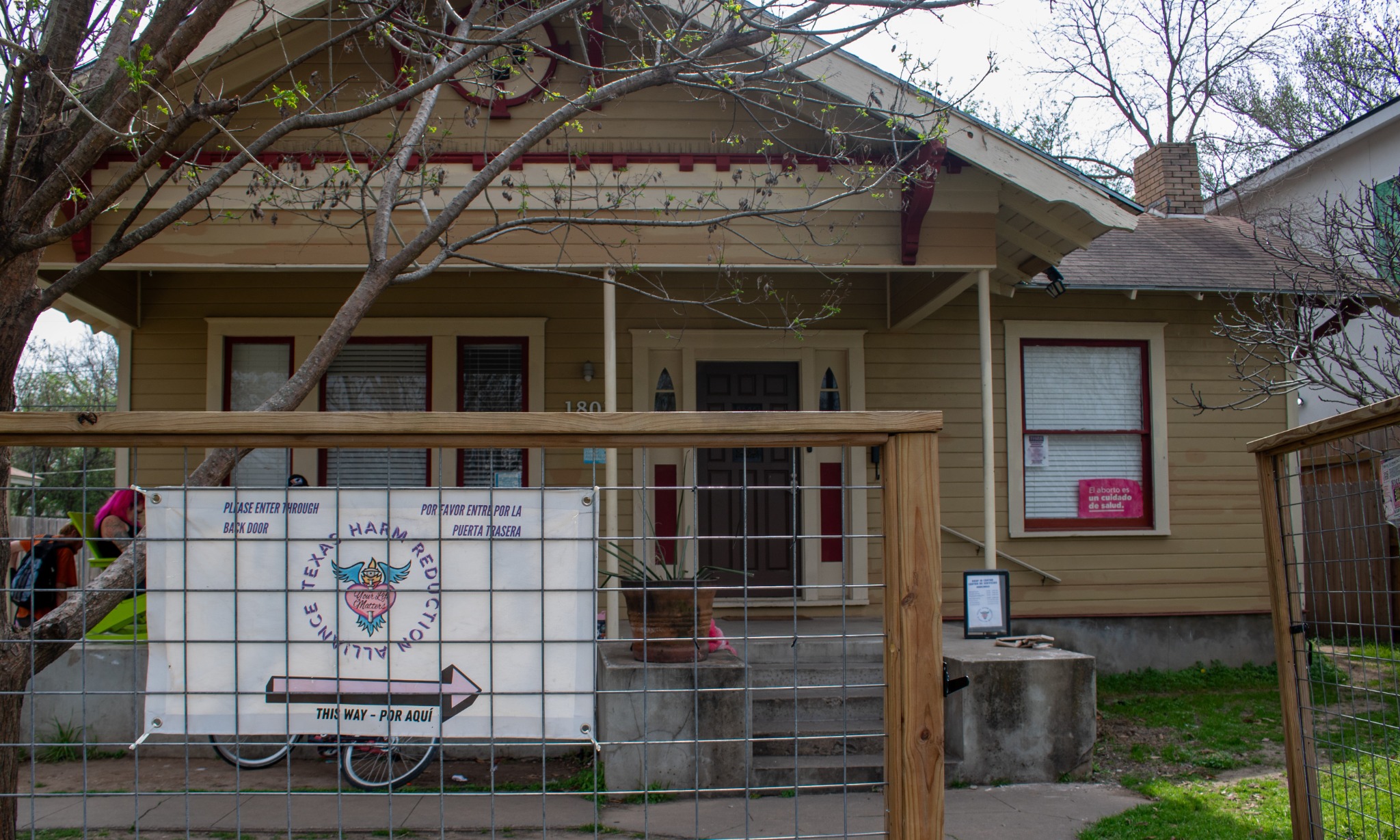
The house at 1803 E. Cesar Chavez St. is indistinguishable from the long line of houses-turned-businesses that line the road in Austin, Texas. The beige and brown-trimmed house wedged between an RV rental service and a personal residence serves an often-ignored community of Austinites at no charge - those experiencing homelessness and drug addiction.
Austin-based Texas Harm Reduction Alliance operates out of both a drop-in location, the house on East Cesar Chavez Street, and a mobile van that visits different unhoused communities daily. Both the van and the drop-in location work to minimize accidental overdoses and the spread of disease by providing naloxone, clean needles and fentanyl test strips. Many of the organization’s efforts are illegal under state law.
In Texas, owning and distributing drug paraphernalia – including test strips, needles and naloxone – is a class C misdemeanor. There is no exception for harm reduction agencies.
This law creates unnecessary danger for organizations searching for a solution to the opioid overdose epidemic, said Kasey Claborn, who directs the Addiction Research Institute at the University of Texas
“That creates an additional burden on harm reduction workers,” she said. “[It] prevents them from being able to use state funds to buy a lot of the harm reduction supplies that we know save lives. So, in reality, this law is just killing people and we're letting it by not passing a better law.”
The Texas Harm Reduction Alliance was created in 2019 in response to the growing opioid overdose rate. To protect its patients from possible harm, the center provides code names to all patients so they can keep accurate data on services used while protecting their patients.
According to data from the City of Austin, accidental overdoses have more than doubled over the past decade. In 2022, nearly 40% of these deaths involved fentanyl. This often happens because drug suppliers or dealers “cut,” or add synthetic opioids like fentanyl, before selling to unsuspecting drug users.
Even a small amount of fentanyl can be deadly.
“We’re currently in the fourth wave of the opioid crises, and that resulted in a drug supply that’s extremely contaminated,” Claborn said. “So what that means is that fentanyl is everywhere … It’s kind of like you’re playing Russian roulette whenever you’re using drugs.”
The only real way to combat this, Claborn said, is for drug users to test their drugs first. This is done using testing strips, but these can be hard to find. This is where community groups, often harm reduction organizations, help to bridge the gap.
“The idea behind harm reduction is that we understand that not all people who use drugs are ready for treatment, but the goal is really just to make sure people are using it more safely,” Claborn said.
This not only reduces the risk for the drug user, but also for the community, she said.
Cole, an unhoused individual who only provided his first name, has been a long-time visitor to the drop-in center.
“It’s a place to get a shower, meal and see some friends,” Cole said. He also received a wound care package and clean needles.
The drop-in location also offers showers, food, legal aid, housing navigation and A/C. Darren Thornhill, who helps with housing assessments at the alliance, said this is just one way they try to take care of “the whole person.”
And for many of the staff members, this is often a mission that hits close to home.
“Everyone here has lived experience in one way or another,” Thornhill said. “And we understand the struggles of being homeless. We understand the struggles of not being able to go lay in your own bed and we also understand the stigma behind using drugs.”
This makes the work a little bit easier for Thornhill and others, like drop-in support specialist Michelle Espinoza.
“I spent most of my life using drugs,” Espinoza said. “So being able to use that knowledge here feels good.”
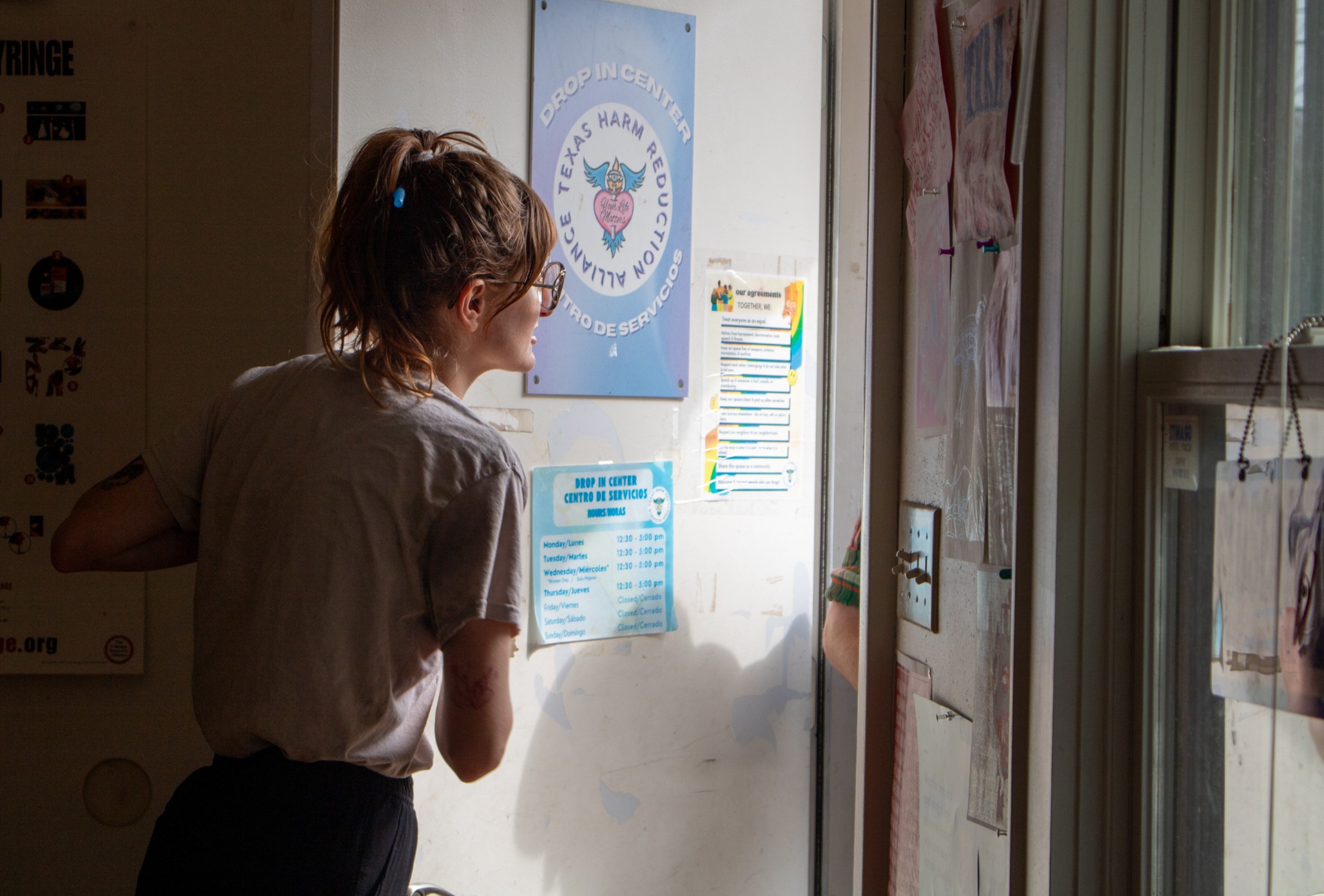
The drop-in center sees just under 100 people a day, providing clothes, wound care supplies, warm meals, clean needles, naloxone and drug test strips. Despite the risk of legal action, Thornhill said harm-reduction organizations like Texas Harm Reduction Alliance must find a way to continue operating.
“We have to keep fighting because we feel if we don't, then it's just going to be more people that are going to continue to overdose,” he said. “Without these harm reduction things in place, we're not giving people a chance to actually change their life before they overdose.”
Lorem ipsum dolor sit amet, consectetur adipiscing elit, sed do eiusmod tempor incididunt ut labore et dolore magna aliqua.
Post a comment